


 Send Inquiry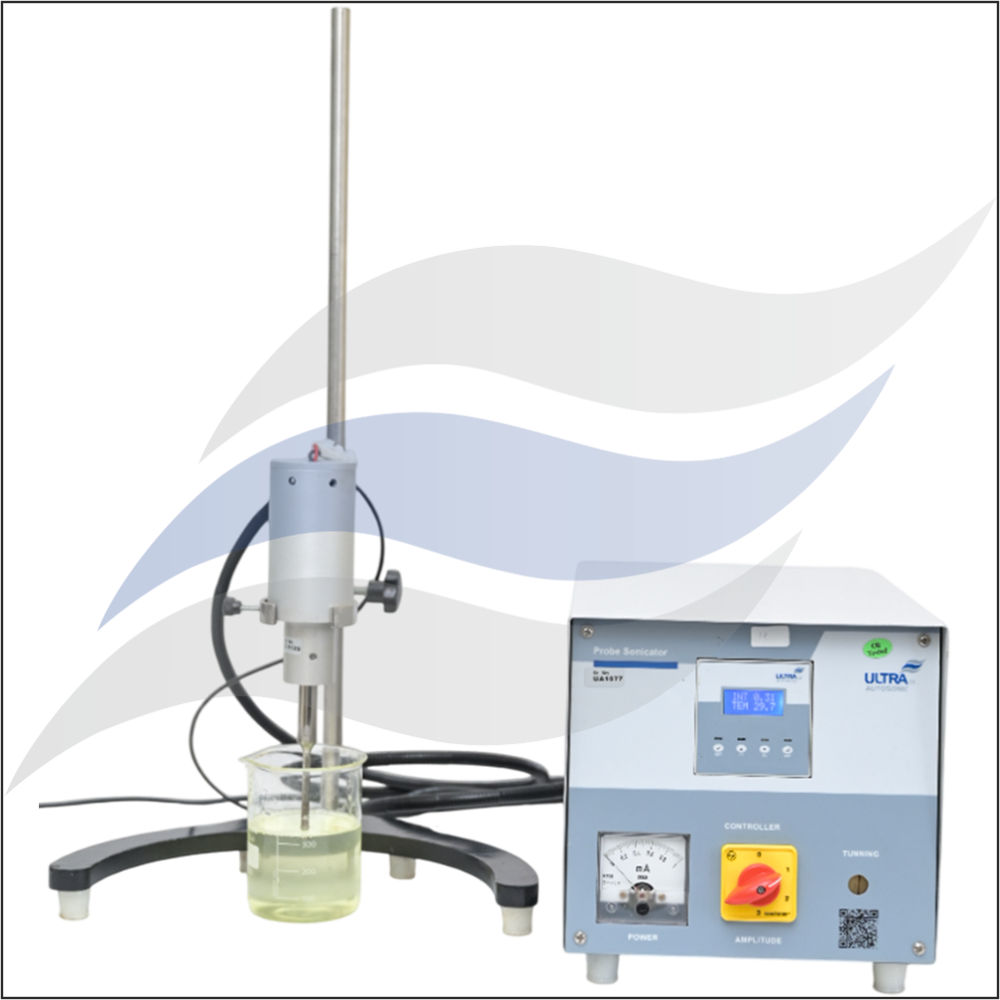
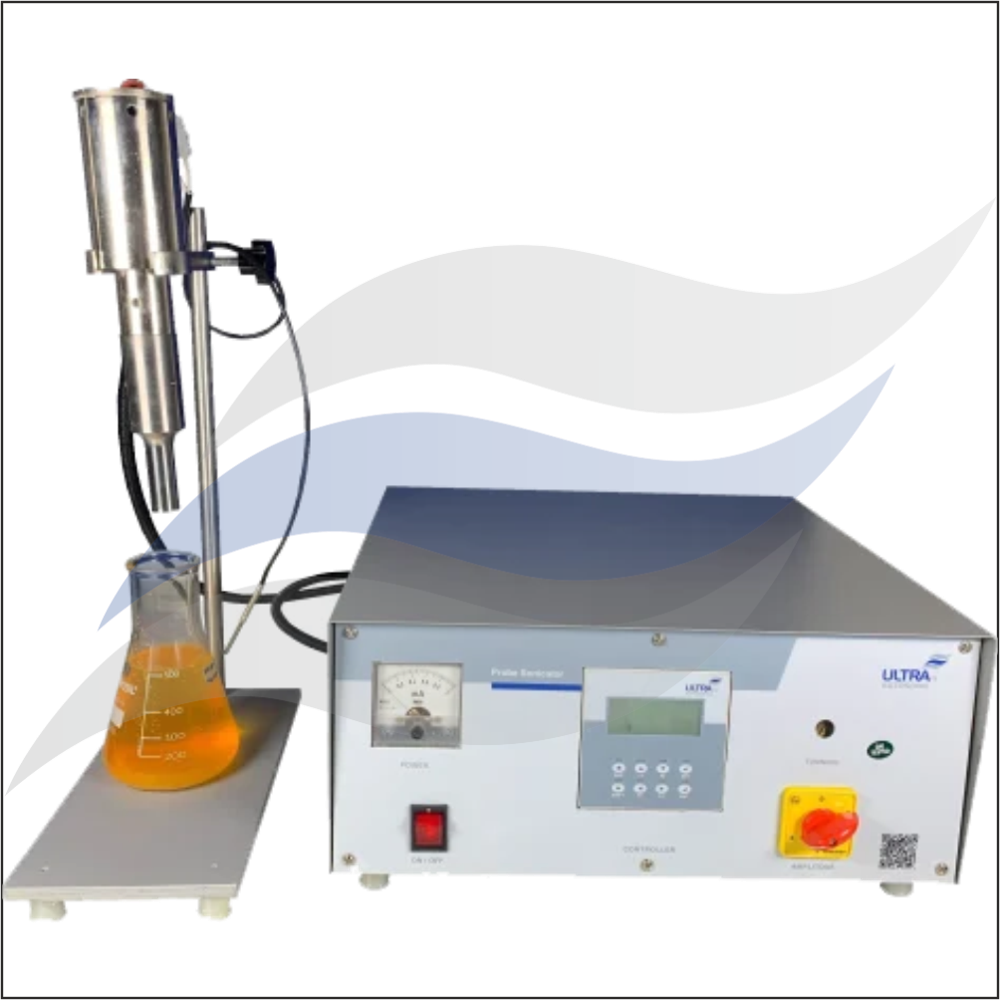
ULTRASONIC PROBE SONICATOR Classic Model 100 Wattage
Product Details:
- Product Type Sonicator
- Capacity 1 - 5000 Milliliter (ML)
- Classification Durable Product
- Weight 10-70 Kilograms (kg)
- Power 120 - 2000 Watt (w)
- Usage Industrial, Research Lab, Pharmaceuticals
- Voltage 230 Volt (v)
- Click to View more
ULTRASONIC PROBE SONICATOR Classic Model 100 Wattage Price And Quantity
- 100000.0 INR/Set
- 1 Set
ULTRASONIC PROBE SONICATOR Classic Model 100 Wattage Product Specifications
- 10-70 Kilograms (kg)
- 1 - 5000 Milliliter (ML)
- Durable Product
- Probe Sonicator
- Sonicator
- 230 Volt (v)
- Titanium, Aluminium
- 120 - 2000 Watt (w)
- Industrial, Research Lab, Pharmaceuticals
ULTRASONIC PROBE SONICATOR Classic Model 100 Wattage Trade Information
- Per Week
- 3 Days
- Yes
- All India
Product Description
Ultrasonic Probe Sonicator Classic Series available in 100 Watt, 125 Watt, 150 Watt, and 250 Watt models. Designed for laboratory and industrial applications, this system delivers precise and efficient sample processing using advanced ultrasonic cavitation technology. The machine is equipped with a user-friendly control panel with 10 programmable memory settings, allowing users to store and repeat specific process parameters for consistent results.
Key Features:
Available Power Options: 100W, 125W, 150W, 250W
10 User Programmable Settings
High-efficiency ultrasonic generator
Durable Titanium Probe (Sonotrode)
Digital display with precise control
Stable amplitude output
Compact and robust design
Titanium Probe Sizes Available:
3 mm
6 mm
13 mm
Applications:
Nanoparticle dispersion
Cell disruption and lysis
Emulsification
Homogenization
Chemical processing
R&D laboratories
Pharmaceutical and biotech research
Reliable Performance for Precision Processing
The Ultrasonic Probe Sonicator Classic Model, with its robust titanium and aluminium construction, supports reliable sonication across a broad power and temperature range. It is specifically crafted to meet the demanding requirements of both research labs and industrial environments, delivering consistent results while accommodating sample volumes from minuscule to substantial.
Versatile Applications in Laboratories and Industry
Designed for use in pharmaceuticals, research labs, and industrial sectors, this sonicator excels in applications such as cell lysis, nanoparticle dispersion, and homogenization. Its adaptability to different sample types and volumes makes it an essential tool for modern laboratories seeking efficiency and accuracy.
FAQ's of ULTRASONIC PROBE SONICATOR Classic Model 100 Wattage:
Q: How does the Ultrasonic Probe Sonicator Classic Model work?
A: This sonicator generates ultrasonic waves at a frequency of 20 kHz, transmitting energy through a titanium probe to agitate and disrupt sample molecules, making it highly effective for cell disruption, homogenization, or emulsification.Q: What materials are used in the construction of the probe sonicator?
A: The probe of this sonicator is made from high-quality titanium and aluminium, ensuring durability, corrosion resistance, and optimal transfer of ultrasonic energy for reliable performance.Q: When is it appropriate to use this ultrasonic sonicator in the laboratory?
A: You should use this sonicator when processes such as cell lysis, particle size reduction, emulsification, or nanoparticle dispersion are required, especially when handling sample volumes ranging from 1 to 5000 mL.Q: Where can the Ultrasonic Probe Sonicator be used?
A: This model is suitable for use in research laboratories, pharmaceutical companies, and industrial settings that require intensive mixing or sample preparation. It is designed for professional environments where precise results are critical.Q: What is the process for operating the Ultrasonic Probe Sonicator?
A: To operate, place your sample in a compatible vessel, set the required power, frequency, and temperature parameters, and immerse the probe in the solution. Activate the sonicator to begin processing according to your application's needs.Q: How does the sonicator benefit laboratory and industrial applications?
A: The sonicator accelerates processes such as cell disruption, mixing, and sample emulsification, saving time and improving efficiency. Its adjustable settings allow for customization, supporting high reproducibility and quality outcomes.Q: What safety precautions should be taken during use?
A: Operators should wear protective equipment, ensure secure probe placement, and monitor temperature to avoid overheating. Following manufacturer guidelines is essential to maintain safety and device longevity.
Price:
- 50
- 100
- 200
- 250
- 500
- 1000+

Other Products in 'Ultrasonic Probe Sonicator' category

|


 Feel free to
- Sr. No. 44/14, Darshana Properties Lane, Opposite Paranjape Abhiruchi Parisar,Pune - 411041, Maharashtra, India
- Phone :08045478214

- Mr Krushna Moholkar (Managing Partner)
- Mobile :08045478214
-
 info@ultraautosonic.com
- Enquiry Contact no. : 917721847555
Email : info@ultraautosonic.com
 Send Inquiry
 Send SMS
Developed and Managed by Infocom Network Private Limited.

